


A smaller monthly repayment can look like an obvious improvement. Sometimes it reflects a longer period of borrowing rather than a smaller overall commitment. Understanding shorter and longer loan terms means looking at both the monthly budget and the total cost. Neither length is automatically right for everyone. This guide shows how to compare the information without choosing from one attractive figure. It also explains why the word term is separate from the rate, whether borrowing is secured and what you intend to use the money for.
What the loan term means
The term is the agreed period over which the borrowing is scheduled to be repaid. Find the actual payment dates as well as the number of months or years. A familiar label such as short-term is less useful than a clear schedule. Keep the first payment, frequency and final scheduled date in your notes. If an illustration shows different possible terms, check which one belongs to the offer you are considering. It is easy to remember a monthly amount while overlooking that the period changed when you moved a slider.
Why the monthly amount can look different
Spreading a commitment over more payments can reduce the amount due each time, depending on the actual terms. That does not automatically make the borrowing cheaper. A shorter period may mean a larger required payment but a different overall interest cost. Compare the offers rather than turning this general explanation into a rule for your situation. Write down both the repayment and the term whenever you record a figure. If one is missing, you do not yet have a meaningful comparison of the commitment.
Keep total repayable beside the schedule
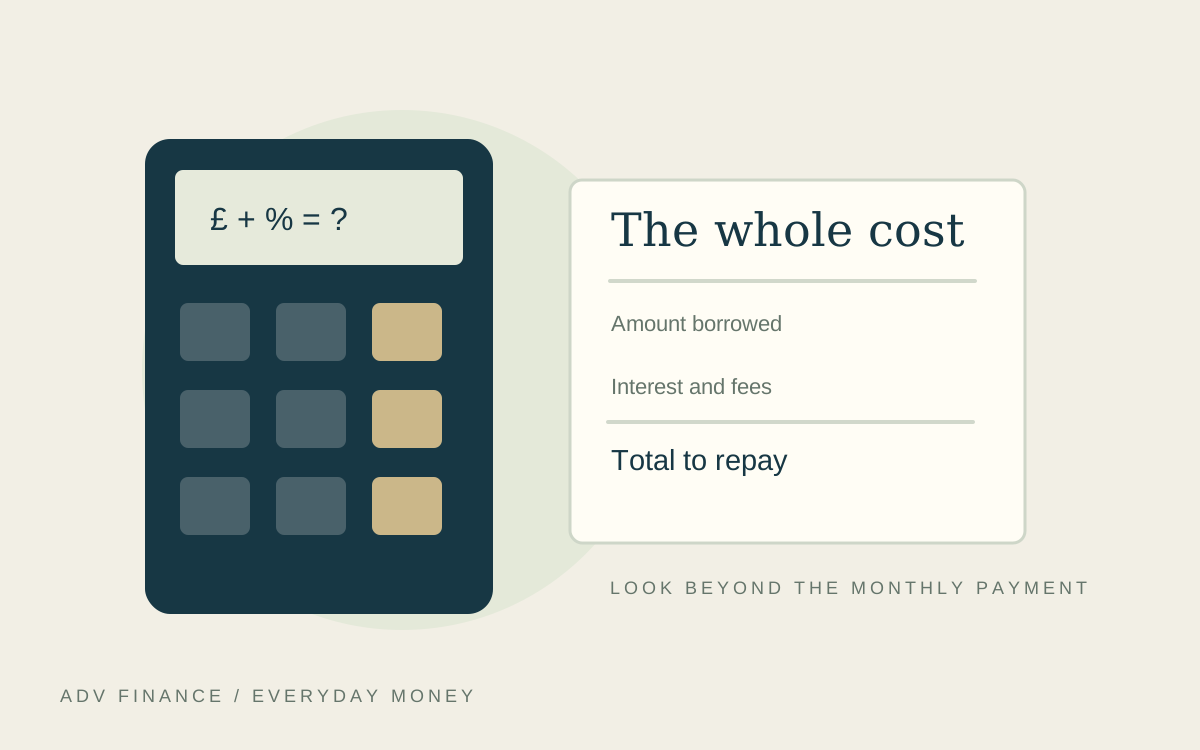
Ask how much would be repaid overall under the stated terms, including relevant interest and charges. Then compare that with the amount borrowed. The difference deserves attention even when the monthly payment looks manageable. Do not assume a longer term is a saving because one figure is smaller, or that a shorter term is sensible if the payment does not fit. You are trying to understand two separate questions: the full cost and the continuing obligation. Both need an answer before the comparison can be useful.
Compare like with like
Use the same borrowing amount when comparing terms, unless the difference in amount is itself something you want to examine. Keep rates, fees and other conditions visible as well. An offer with a different rate or charge cannot be explained by the term alone. Give each option its own line in your notes and label estimates clearly. For example, record the amount, term, repayment, total repayable and outstanding questions together. This makes it harder to accidentally combine the most attractive figure from one illustration with the conditions of another.
Look beyond this month's circumstances
A loan schedule can extend across changes in income, bills and other commitments. You cannot predict everything, but you can identify assumptions. Is a payment plan relying on earnings you are not sure of receiving? Are known annual costs included? What would a less comfortable month look like? These questions are useful for a shorter or longer term. The point is not to select the most optimistic budget. It is to understand the continuing obligation and the room left around essentials, rather than treating the first payment as the whole decision.
Ask about changing the plan later
Read what the agreement says about early repayment and any related process or charge. Do not assume that choosing a longer term and repaying early will necessarily work exactly as you imagine. Ask how a figure would be confirmed if your circumstances changed. Keep the explanation with the offer. This is an information-gathering step, not a prediction that you will have extra money. Understanding the process before you need it is more reliable than making a decision around an untested assumption about what you could do later.
Use illustrations to ask better questions
Our loan calculator can help you explore how figures relate, but an illustration is not a lender's offer or a guarantee of eligibility. Use it to identify questions, then compare the actual terms provided. If a number changes unexpectedly when the term changes, ask why rather than guessing. The useful result is being able to explain the relationship between the schedule and the full cost. A calculator should support that understanding, not create pressure to apply because one version of the monthly figure happens to look appealing.
Take the comparison back to real life
MoneyHelper explains managing credit and borrowing costs. You can also read our guide to loan agreements for a practical document checklist. Keep a record of the option you reviewed and the date, particularly if rates or terms are still being confirmed. If bills or repayments are already difficult, independent debt support may be more useful than trying to extend or shorten another commitment. The organisations below can help you look at the wider picture. A clear comparison should leave you with a better explanation, not a feeling that one term must suit everyone.
Sources reviewed on 13 November 2026. These are general explanations for UK readers, not personal financial, legal or debt advice.