

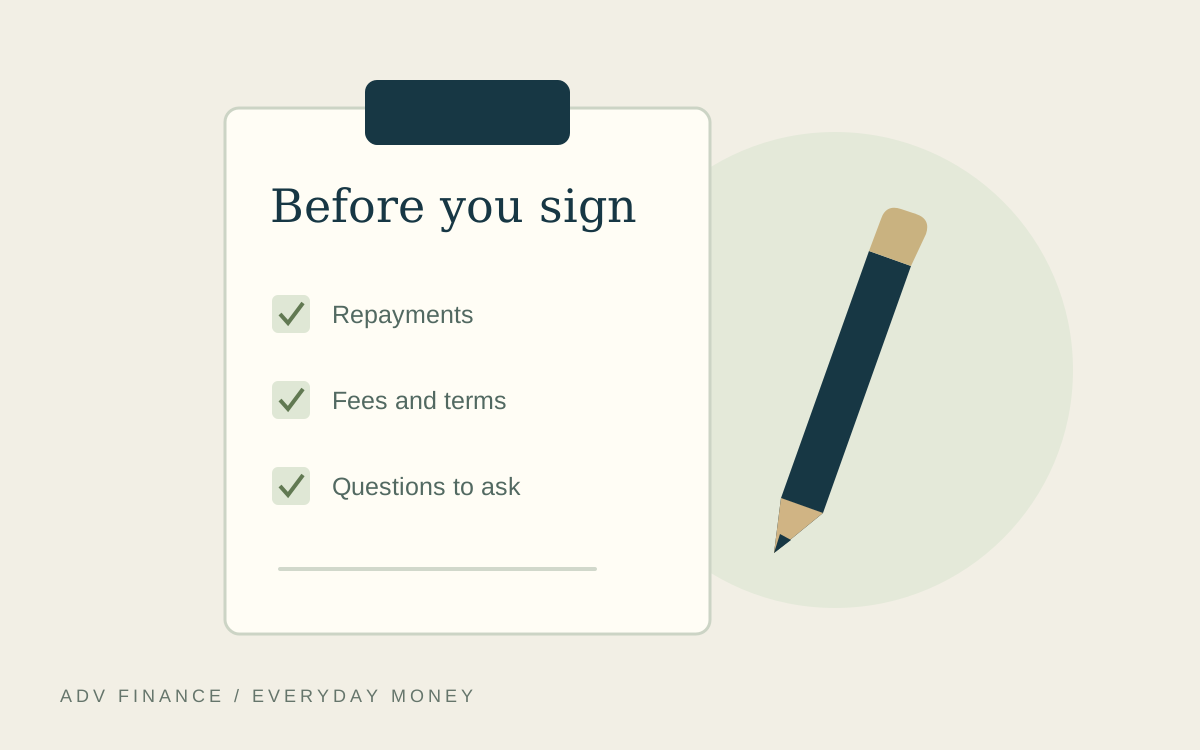
The agreement is open, the main figures look familiar and the next button asks you to accept. This is a useful moment to pause. A loan agreement creates a commitment, so its wording deserves more attention than a quick glance at the monthly payment. This loan agreement checklist gives you a practical reading order. It is not a substitute for the actual terms or advice about your situation. Its purpose is to help you organise the questions that matter before deciding, while keeping a record you can return to later.
Put the offer and agreement together
Find the version of the offer you are considering and the agreement that goes with it. Check the provider's name and make sure you are looking at the correct documents, particularly if you have compared several options. Keep a note of the date. If an email or conversation appeared to describe something different, place that beside the agreement too. The aim is to identify a precise question, such as a different amount or date, rather than relying on a general impression that the terms seem familiar.
Check the amount you would borrow
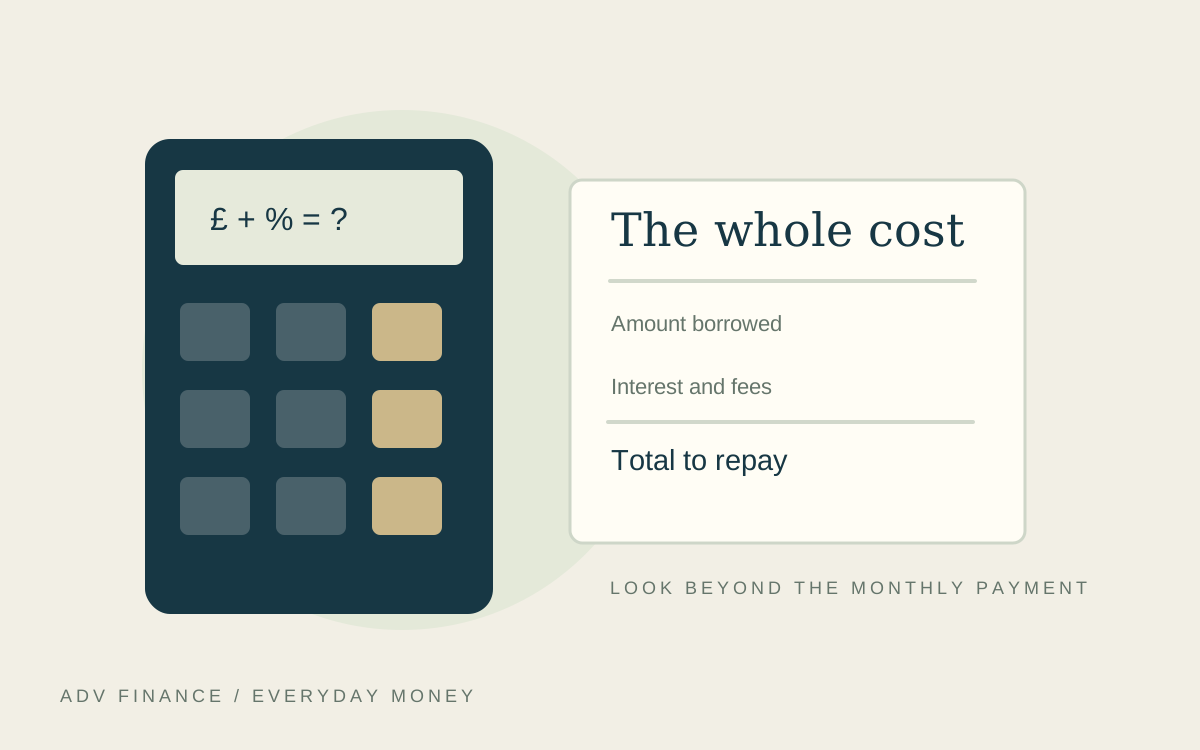
Locate the amount borrowed and compare it with what you expected. Then find the total repayable and any charges described separately. Ask the lender to explain how these figures connect if that is not clear. Do not assume a cost is included simply because you saw another figure earlier. A useful record is a short list of the exact numbers and where they appear. If you change the amount or term during an application, check the updated documents again instead of using notes from a previous version.
Read APR alongside the full cost
APR is a measure of annual borrowing cost that includes interest and certain charges. Keep it beside the repayment amount, term and total repayable when reviewing the offer. The percentage alone does not tell the whole story. Ask whether the rate described in your actual agreement is the same as the one you expected and which charges could apply in different circumstances. An advertised rate is not automatically your rate. The commitment you are considering is the one set out in the personalised terms, not a headline remembered from another page.
Put every payment date in your calendar
Identify the first payment, the frequency of later payments and the final scheduled date. Compare them with your income and regular bills. Check the payment method and whether there is anything you must arrange. For example, a schedule that begins sooner than expected could affect the money available for other commitments. If you need a date explained, ask before accepting. A reminder can help you keep track later, but setting a reminder is not the same as understanding or being able to meet the payment obligation.
Find the wording about early repayment
People's plans change. Read what the agreement says about repaying early, whether partly or in full, and any applicable process or cost. Rather than guessing what a phrase means, ask the lender to explain what you would need to do and how a figure would be confirmed. Keep the answer with the agreement. This is an information-gathering step, not a prediction that you will repay early. Understanding the process before you need it can make a future conversation easier and reduce the chance of relying on an assumption.
Read the missed-payment section before you need it
Find the explanation of missed or late payments, including possible fees and other consequences. Write down the provider's contact route for payment difficulties. If you already think a payment may be hard to make, raise that concern before entering the agreement rather than planning to deal with it afterwards. You do not need to wait until you have fallen behind to seek independent debt guidance. A general article cannot tell you what arrangement would be appropriate; an adviser can help you examine the wider circumstances and available options.
Check the budget away from the application screen
Look at the proposed repayments alongside essential spending and existing commitments. Include known costs that arrive less often than monthly. Think about a less comfortable month as well as a good one. This is a chance to notice a question, not an exercise in persuading yourself that the agreement must fit. If an answer depends on uncertain income or the absence of any unexpected expense, acknowledge that uncertainty. Taking a break from the screen can make it easier to read the figures without feeling pushed towards a particular decision.
Save a copy you can find again
Keep the agreement, repayment schedule and important correspondence together in a private place. Give digital files clear names and make sure you can access them after leaving the application page. Before agreeing, try explaining the commitment in your own words: what you receive, what you repay, when payments happen and which terms need attention. If you cannot describe a part clearly, that is a sensible question to ask. A clear explanation should help you understand the choice, rather than make you feel embarrassed about requesting more detail.
Use the checklist to start a conversation
You might end with three questions, one corrected assumption or a decision to pause. Those are useful outcomes. MoneyHelper provides further information about personal loans, and our borrowing guide explains common terms. ADV Finance is a credit broker, not a lender; questions about the exact agreement should go to the lender offering it. If bills or repayments are already difficult, use the independent support links below before feeling that you must make another commitment.