


Loan names can make similar-looking repayments sound more alike than they really are. One important distinction is whether borrowing is secured against an asset. That can change the consequences of not keeping up with payments, even when the monthly figures appear comfortable. This guide explains secured and unsecured loans without recommending one for your circumstances. It is intended to help you ask better questions about the actual agreement. ADV Finance introduces customers for unsecured loan agreements; the wider comparison here is general information rather than an offer of secured borrowing.
What secured borrowing means
With a secured loan, an asset is used as security for the borrowing. Depending on the agreement, that may be a home or another asset. If repayments are not maintained, the asset can be at risk. Treat this as a central part of the commitment, not a small item beside the rate. Ask what is being used as security and what the terms mean. If the explanation is unclear, pause before agreeing. A familiar provider name or a manageable-looking first repayment does not remove the need to understand the asset risk.
What unsecured borrowing means
An unsecured loan is not secured against a particular asset in that way. It is still borrowing that must be repaid under the agreement. Missed payments can have consequences, including charges, effects on credit information and possible further action. Do not translate the word unsecured into “nothing serious can happen”. The useful comparison is between the actual obligations and risks, not between a safe-sounding and a worrying-sounding label. Read the payment terms and the explanation of what happens if you cannot keep up, whichever type of agreement you are considering.
Keep different ways of describing loans separate
A loan can be described by its purpose, its repayment period, whether an asset is involved and the way interest works. These are separate characteristics. For example, calling borrowing a consolidation loan describes what the money is intended to do; it does not by itself tell you whether the loan is secured. Make a short list of the features of the actual offer. This is more informative than relying on a category name that may leave several important questions unanswered. If a feature is not clear, ask the provider to identify it directly.
Compare the full cost rather than one rate
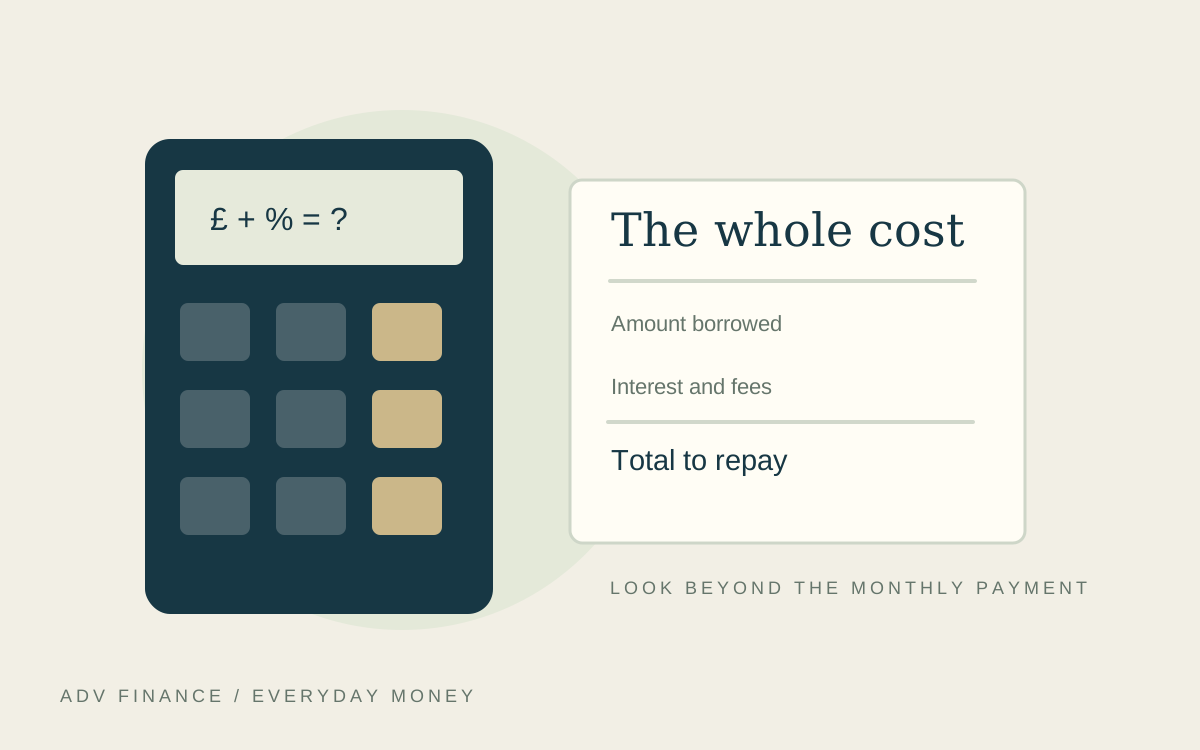
Put the amount borrowed, term, repayment schedule, fees and total repayable together. A lower monthly figure can reflect a different repayment period, so it does not automatically show a lower overall cost. Check any arrangement or early-repayment charges that are relevant to the offer. Use current information from the actual terms rather than figures from another example. You are trying to understand the commitment as a whole. A useful comparison makes both the money and the risk visible, instead of treating a rate as a complete answer to the decision.
Think about the consequences before the purpose
A planned purchase or a desire to simplify payments can feel urgent. Take time to consider what the agreement would mean if circumstances changed. Which asset, if any, is involved? What payment is required? Who would you contact if there were a problem? These are questions to ask before deciding whether the purpose justifies the commitment. A general article cannot assess whether putting an asset at risk would be appropriate for you. Independent guidance can help you look at that wider question without assuming a particular product must be the outcome.
Look at the budget through the whole term
Compare the proposed schedule with income, essential spending and existing commitments. Include costs that arrive less often than monthly. Think about a less comfortable period, not only the month in which you are applying. If the repayment plan relies on a future event you cannot count on, write down that uncertainty. This is not about predicting every possible problem. It is about understanding the room available and identifying assumptions before they become part of a commitment. Approval or an available amount does not do this planning for you.
Read the documents with specific questions ready
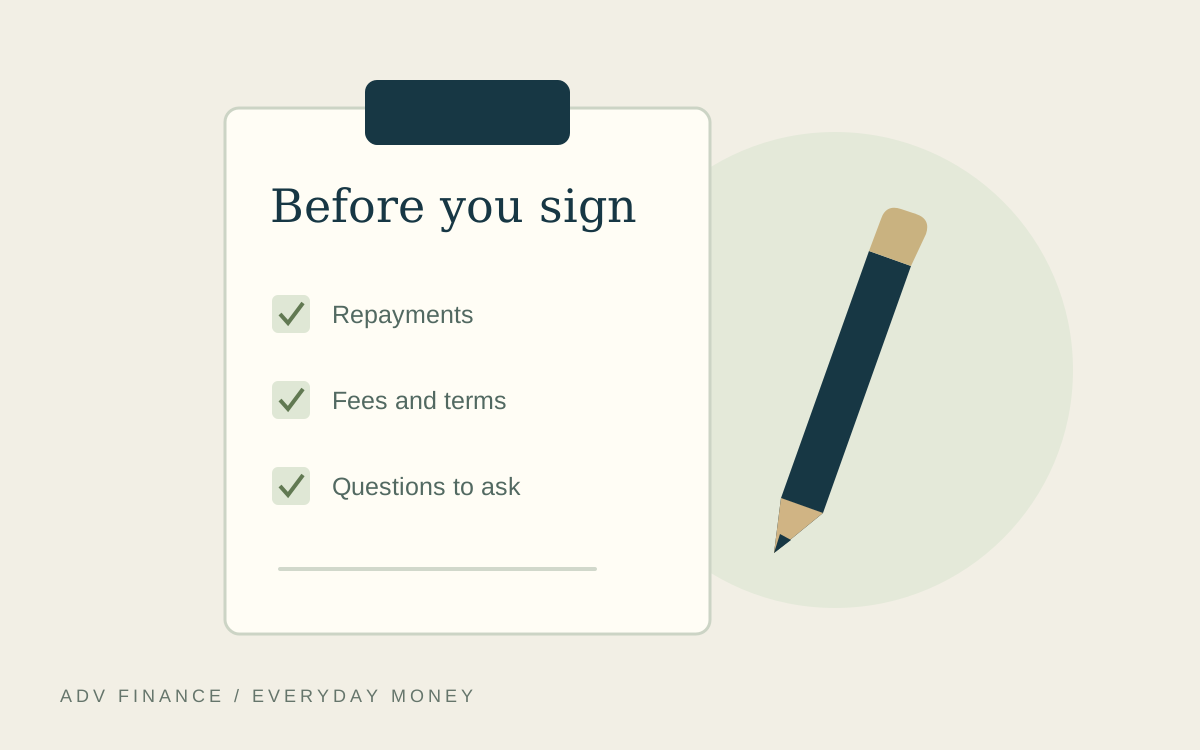
Keep the offer and agreement together. Highlight the words about security, payment dates, charges and payment difficulties. Ask for a plain-English explanation of any wording you cannot follow and keep the answer with your notes. If you are comparing offers, avoid combining a figure from one with the conditions of another. Give each option its own record. It can help to explain the commitment back in your own words: what you receive, what you repay and what is at risk. An unanswered question is a reason to seek clarity rather than to guess.
Know where to get a wider view
MoneyHelper explains secured and unsecured borrowing, and Citizens Advice provides personal-loan information with options for different UK countries. If you are already having trouble with bills or repayments, use the independent support section below before feeling that another agreement is the only next step. A clear comparison should help you understand the decision, not make one category appear suitable for everyone. Take the time needed to understand the actual terms and the consequences they describe.
Sources reviewed on 13 November 2026. These are general explanations for UK readers, not personal financial, legal or debt advice.