

A personal loan and a credit card are both ways of borrowing, but they organise the commitment differently. A loan usually involves receiving a set amount with a repayment schedule. A credit card allows spending within an agreed limit under account terms. Neither description makes one automatically better for you. The useful question is what the actual offer would cost and how it would work alongside your budget. This guide explains the differences without recommending an application, a product or a way of dealing with an existing shortfall.
Start with the need rather than the product
Write down what you are considering paying for, the amount involved and whether it is a known cost or a continuing gap. Keep that explanation separate from the amount a provider might make available. A bigger limit or borrowing amount does not change the original purpose. If the issue is that essential spending regularly exceeds income, a different credit product does not by itself explain how the gap will be resolved. Free debt guidance may be a more helpful starting point than comparing ways to add another commitment.
How a personal-loan schedule works
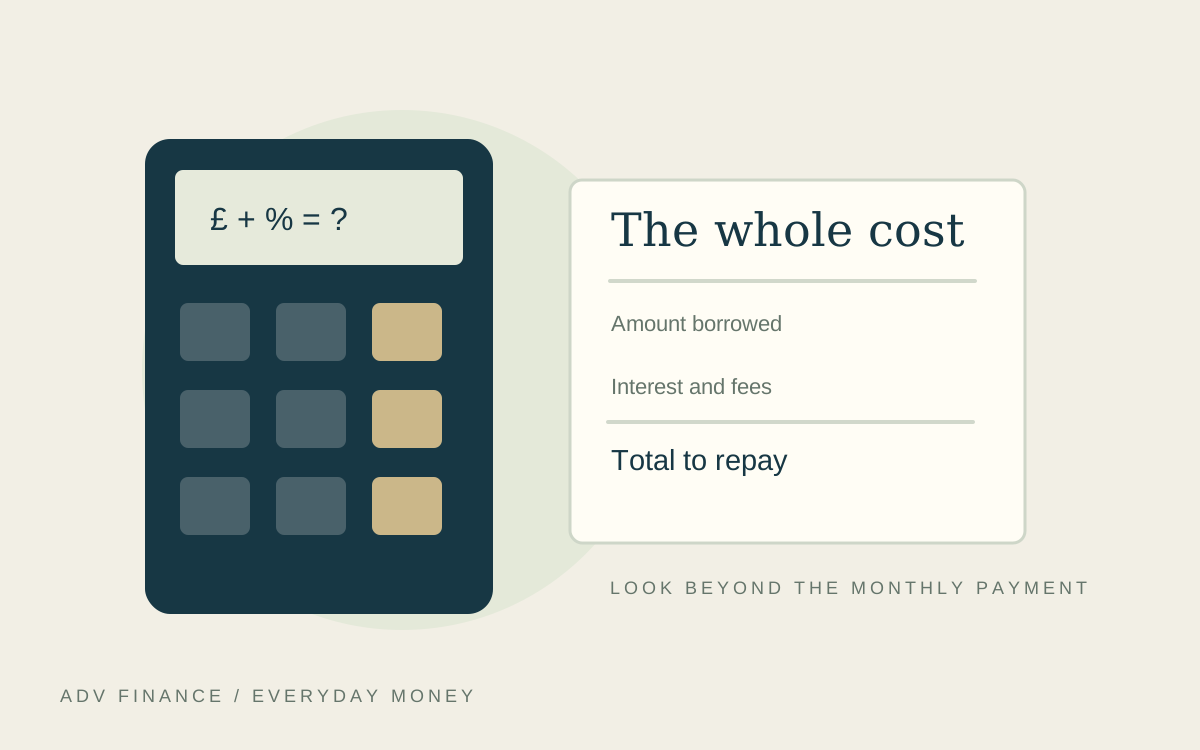
A personal loan generally provides a lump sum that is repaid over an agreed period, with the interest and charges described in the offer. Read the amount, term, payment dates and total repayable together. Do not assume every loan has identical rate or early-repayment conditions. You should be able to identify the continuing obligation rather than relying only on a monthly headline. If the purpose is to cover one known cost, the schedule may be straightforward to describe, but it still needs to fit the rest of your circumstances.
How a credit-card account works
A credit card has an agreed limit and a balance reflecting what you owe. Statements explain payment requirements, while rates and charges can differ between transaction types. Available credit is not money you have saved. New spending can change the balance and the repayment picture, so the account needs continuing attention. Before using it, ask how the purchase would be repaid and which terms apply. The fact that a transaction can be made is not the same thing as having a clear plan for the borrowing it creates.
Compare the costs of the use you intend
Look at the actual loan terms or the card terms for the particular transaction. Interest, fees, introductory periods and later rates can all matter. A card's offer for balance transfers does not necessarily describe purchase costs. A loan's advertised rate does not guarantee the rate offered to you. Keep the comparison specific instead of using a general statement that one type is always cheaper. You need information about the commitment you would actually enter, including what happens if the repayment plan does not unfold as expected.
Think about flexibility and the temptation to add spending
A scheduled loan and an account that permits further spending can feel different to manage. Consider which parts you understand and how you normally organise payments, without treating flexibility as automatically helpful or automatically bad. More scope to spend can make it harder to keep the original purpose separate from later purchases. A fixed schedule does not remove the need to read conditions or keep repayments manageable. The useful exercise is to imagine how the agreement would be used in practice, rather than how tidy it looks in a product summary.
Put either commitment beside the same budget
Record income, essential spending and current obligations. Include known costs that do not happen every month. Then look at the proposed borrowing through a less comfortable month as well as a good one. Avoid comparing a realistic loan payment with an optimistic card plan, or the reverse. Keep assumptions visible, particularly if a plan relies on uncertain income. You are not trying to prove that one application should succeed. You are trying to understand what repayment would require and what room remains for the rest of everyday life.
Ask what happens if circumstances change
Find the provider's explanation of missed payments, charges and support routes. For a loan, read the early-repayment terms as well. For a card, check what happens when any introductory period ends and whether new spending has different conditions. Keep answers with the documents so you can find them later. If something is unclear, ask the provider to explain it using the actual offer. A plain-English answer should make the commitment easier to describe, not leave you feeling that you have to know the terminology before being allowed to ask a question.
Decide whether more information is the right next step
NatWest compares loans and credit cards, and Citizens Advice explains personal loans. These sources provide background rather than a recommendation of a provider. ADV Finance is a credit broker, not a lender, and an introduction does not guarantee approval. If you are already finding payments difficult, use the independent support links below. Understanding the difference between products can be useful even when the decision is to pause rather than borrow.
Sources reviewed on 13 November 2026. These are general explanations for UK readers, not personal financial, legal or debt advice.